Why was the Palace of Winds built?
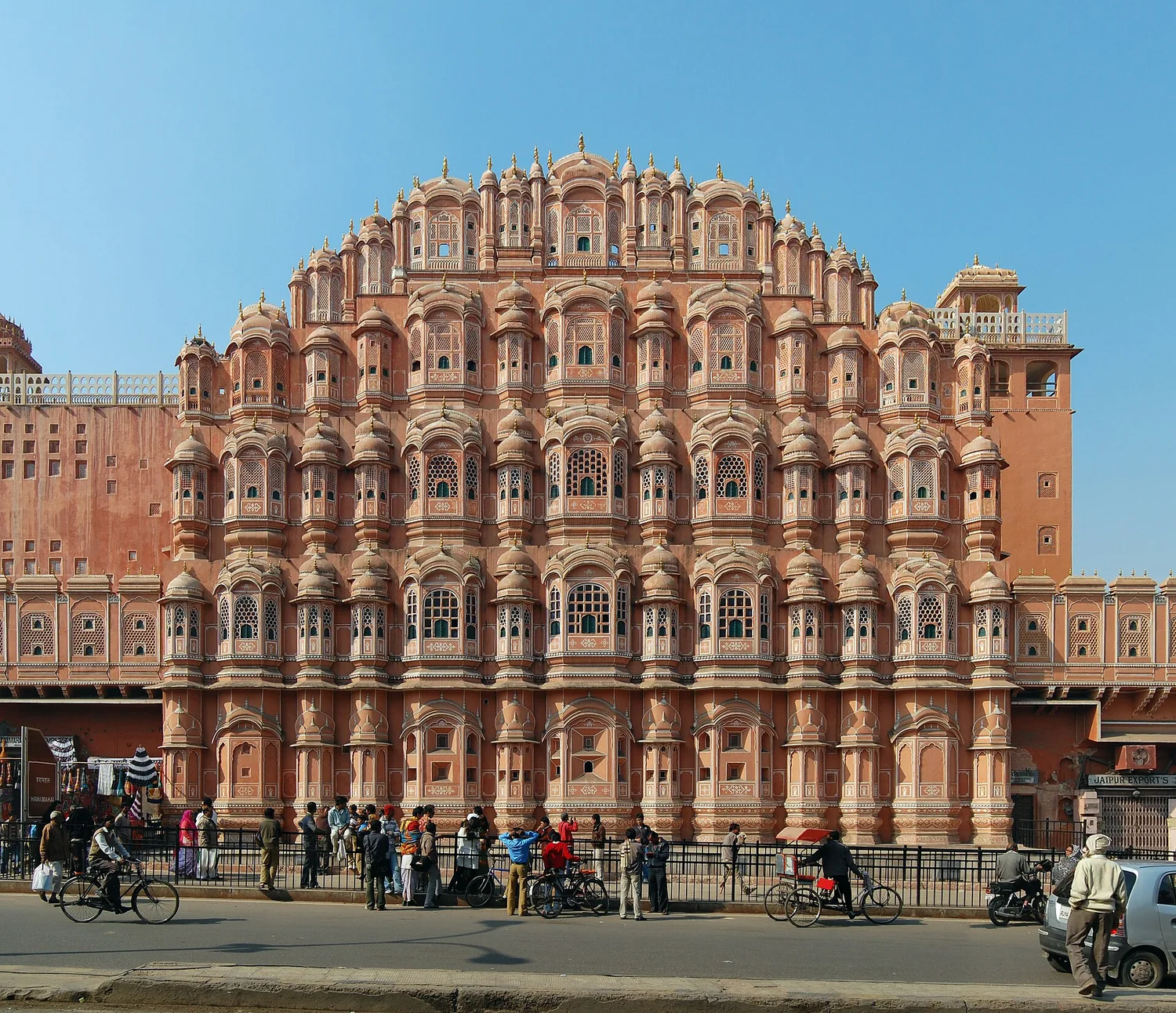
Sawai Pratap Singh commissioned Hawa Mahal in 1799 as part of the City Palace complex. Its pink sandstone screen, with many small jharokhas and lattice openings, let royal women observe processions and street life while remaining out of public view. The five-storey façade is more delicate than a fortress wall, and its honeycomb profile was designed to draw air through the rooms. Today it is one of Jaipur’s most recognizable street views, but the building’s courtly role is as important as its appearance.
What details can you see from the street and inside?
Begin with the public view across the road, where the stacked balconies and scalloped windows are easiest to appreciate. Inside, ramps and narrow passages lead through small chambers and up toward openings that frame the old city. The interior visit is shorter than City Palace, yet the view back toward the bazaar is rewarding. The façade faces a busy road; use the pavement and formal crossing points rather than stepping into traffic for a photograph. Avoid blocking shop entrances while the driver is finding a legal stop.
When should you visit the palace?
Early morning often brings cooler air and better light on the east-facing stonework. Allow about 45 to 90 minutes for the exterior and interior, longer if you read displays or combine it with the adjacent monuments. Opening times and ticket categories change; any Indian or foreign visitor amount should be treated as approximate, then confirmed at the Hawa Mahal ticket counter. If the day is hot, carry water before joining a queue. A short visit can fit before lunch, but it should not be squeezed between two distant attractions.
Where can the taxi wait near the bazaar?
Tell the driver you want the Hawa Mahal visitor entrance or a nearby legal parking zone; a car cannot wait directly in front of the façade. The lane can be crowded with buses, pedestrians and vendors, so agree on a pickup pin along a wider road. A sedan can manage a small party, while a compact hatchback is handy for a short old-city drop; luggage-heavy families should choose a larger vehicle and leave bags at the hotel. Walk to City Palace or Jantar Mantar rather than repeatedly moving the car.
How can you link Hawa Mahal with a city tour?
City Palace, Jantar Mantar and the bazaars sit close enough for a walking segment, while Albert Hall and the hill forts need separate driving time. The Jaipur half-day tour suits a focused old-city loop; use the full-day tour if you also want Amer. Nearby City Palace offers royal courtyards and galleries, and Jantar Mantar adds an open-air observatory. Confirm each site’s current entry schedule before setting a fixed lunch or train departure.